Payment Security Foundations Behind Complex Accumulator Tactics in Live Sports Betting and Casino Play
Frankie Patterson · Aug 24, 2026

Payment Security Foundations Behind Complex Accumulator Tactics in Live Sports Betting and Casino Play
Secure payment systems form the backbone that allows bettors to construct and adjust multi-leg accumulator wagers across football matches, horse racing events, and live casino tables without interruption. These frameworks handle instant deposits, rapid withdrawals, and encrypted data flows that keep pace with fluctuating odds during in-play scenarios. Data from industry reports shows transaction volumes in remote betting channels rising steadily through mid-2026, with August figures reflecting heightened activity around international tournaments and seasonal racing calendars.
Core Components of Synchronized Payment Networks
Modern accumulator strategies rely on layered security protocols that verify each stake in real time while maintaining session continuity across multiple markets. Payment gateways process micro-transactions for partial cash-outs or stake adjustments, connecting directly to sportsbook and casino servers through APIs that reduce latency to milliseconds. Researchers at institutions such as the University of Nevada, Reno have documented how these connections prevent common points of failure during high-volume periods, allowing complex bets to span pre-match selections and live dealer outcomes without separate authentication steps.
Encryption standards and tokenization techniques shield card details and account balances even as users switch between soccer accumulators, racing multiples, and blackjack side bets on the same platform. Observers note that biometric verification layers now integrate with these payment rails, confirming identity once per session rather than per transaction. This setup supports the fluid movement of funds that accumulator players require when odds shift dramatically in the final minutes of a race or match.
Accumulator Construction in Live Environments
Live sports and casino settings demand payment systems capable of handling sequential additions to an accumulator while odds update continuously. A bettor might open a football parlay, add a live horse racing leg during the parade ring, then incorporate a roulette streak outcome, all within a single ticket. Secure rails authorize each incremental stake immediately, preventing rejections that could break the chain. Figures released by Canadian regulatory bodies indicate that platforms employing unified payment ledgers record higher completion rates for such multi-market tickets compared with fragmented systems.
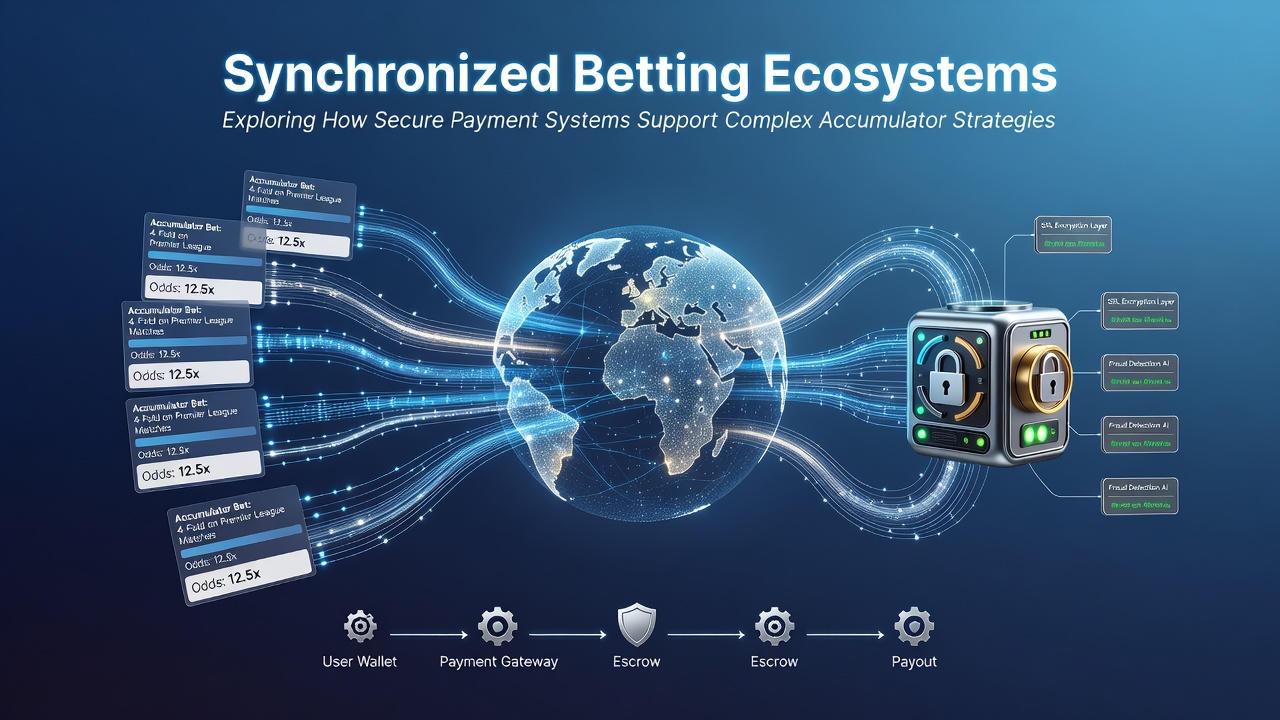
Case examples from European operators illustrate how instant funding transfers allow users to top up balances mid-event without exiting the betting interface. One documented workflow involves a user adding a live casino accumulator leg after an initial soccer and racing combination, with the payment processor confirming the new stake before the next spin or card deal. These seamless additions depend on pre-authorized credit lines and real-time risk checks that operate in the background.
Regional Regulatory Influences on Transaction Security
Regulatory frameworks in North America and Australia shape the standards that payment providers must meet when serving cross-border betting platforms. Licensing requirements often mandate specific encryption thresholds and audit trails for every accumulator-related transfer. Data compiled by the Australian Institute of Criminology highlights measurable reductions in disputed transactions once operators adopt centralized payment verification hubs. These hubs synchronize with betting engines to flag anomalies such as rapid stake increases that might signal either sophisticated strategies or irregularities.
August 2026 schedules show continued alignment between major sporting calendars and enhanced payment compliance deadlines, prompting platforms to upgrade their infrastructure ahead of peak periods. Such upgrades ensure that accumulator builders remain operational even when thousands of concurrent users adjust live bets across sports and casino verticals simultaneously.
Future Integration Trends
Emerging technologies including distributed ledger elements and advanced token systems promise further synchronization between payment flows and accumulator management tools. Industry analyses project expanded use of these methods in both sportsbooks and casino environments, where complex multi-leg wagers continue to grow in popularity. The result is an ecosystem where secure transactions no longer act as bottlenecks but instead enable the intricate timing required for live accumulator success.
Conclusion
Payment infrastructure directly determines the viability of sophisticated accumulator approaches that span live sports and casino offerings. As transaction security evolves alongside betting technology, the capacity for real-time, multi-market strategies expands accordingly, supported by regulatory standards and technical integrations that maintain operational integrity across global platforms.