Betting Sector Sets New Benchmark for Age Verification Success Rates
Petra Klein · Aug 19, 2026

Betting Sector Sets New Benchmark for Age Verification Success Rates
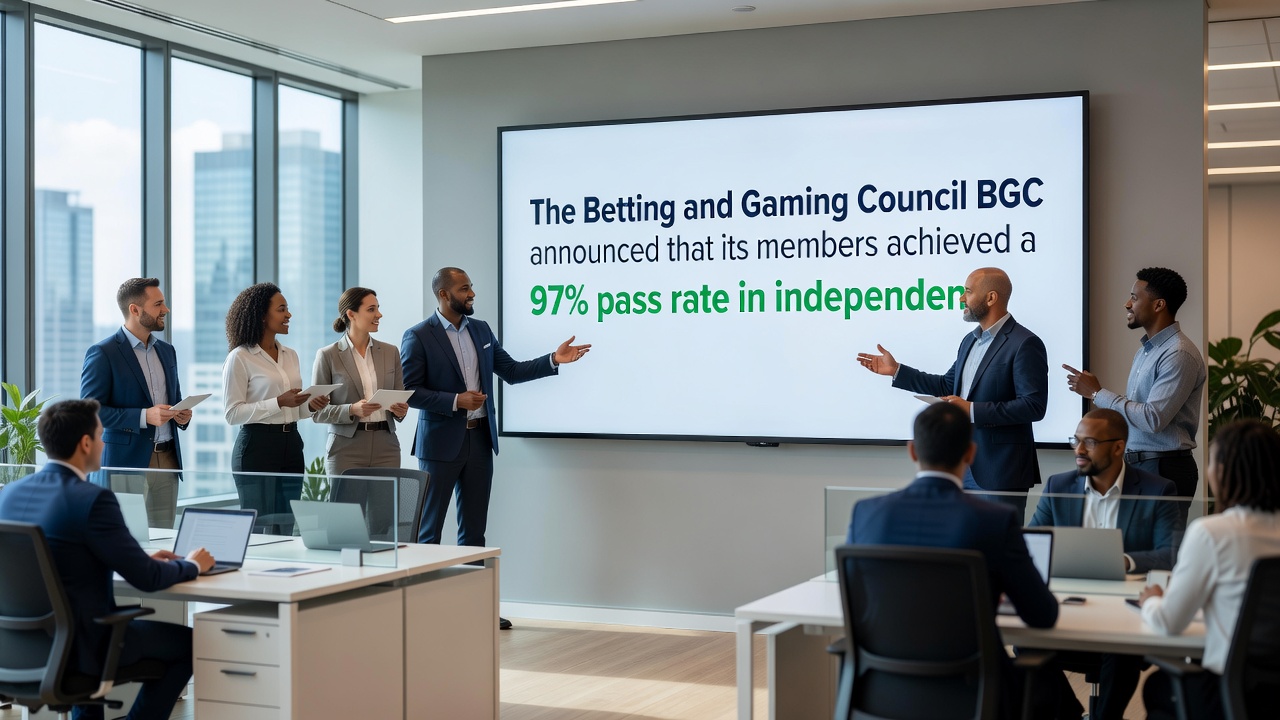
The Betting and Gaming Council announced that its members recorded a 97 percent pass rate during independent age-verification tests run by Serve Legal from May 2025 through April 2026, and this figure surpassed results posted by supermarkets at 80 percent, convenience stores at 77 percent, specialist vape shops at 61 percent, and delivery services at 44 percent. The outcome represents a five-percentage-point gain over the prior year while also marking the strongest performance among all sectors included in the same benchmarking exercise.
Test Purchasing Framework and Sector Comparisons
Serve Legal conducted the mystery shopping program across multiple retail categories, and the regulated betting and gaming operators maintained Challenge 25 policies alongside staff training programs that contributed to their elevated compliance scores. Data from the full testing window shows consistent application of these measures across licensed premises, whereas other sectors recorded lower rates of successful ID checks during equivalent purchase attempts. Observers note that the five-point year-over-year improvement reflects ongoing refinements in training protocols and in-store verification processes that operators implemented after reviewing earlier results.
Figures reveal the betting sector achieved the highest mark among benchmarked industries, and this margin highlights differences in operational standards that each category applies to age-restricted sales. The same testing cycle placed supermarkets and convenience stores in the middle of the range, while vape shops and delivery services posted the lowest pass rates during the May 2025 to April 2026 period. Researchers tracking retail compliance have documented similar patterns in prior years, although the current results indicate the betting operators widened their lead.
Operational Measures Driving the Reported Outcomes
Members of the Betting and Gaming Council integrated enhanced staff training modules that emphasize identification checks at point of sale, and these sessions occur regularly to maintain awareness of current verification requirements. Challenge 25 policies require staff to request proof of age from any customer who appears under that threshold, and operators report that adherence to this standard formed a central element of their test performance. The combination of policy enforcement and repeated training produced the 97 percent pass rate across the tested locations.
Independent verification by Serve Legal covered a broad sample of betting shops and gaming venues throughout the United Kingdom, and the methodology remained consistent with previous cycles to allow direct year-on-year comparison. Operators adjusted internal audits in response to earlier feedback, and those adjustments aligned with the five-percentage-point rise recorded in the latest round. The regulated framework under which these businesses operate requires documented procedures for age verification, and the test outcomes demonstrate how those procedures translate into measurable compliance rates.
Context Within August 2026 Regulatory Environment
By August 2026 the results from the twelve-month testing window ending April 2026 continue to serve as a reference point for industry and regulator discussions on youth protection measures. The Betting and Gaming Council has referenced the Serve Legal data when describing how licensed operators maintain safeguards that exceed those observed in adjacent retail categories. Licensing conditions already mandate age-verification training, yet the reported scores suggest additional internal standards further strengthened performance during customer interactions.
Delivery services and specialist vape outlets recorded the lowest pass rates in the same dataset, and this contrast underscores variations in how different sectors approach point-of-sale checks. The betting operators' results stand apart because their retail model incorporates both physical premises and staff presence, factors that facilitate immediate ID verification. Data collected across the full period shows these structural elements contributed to the sector's leading position in the rankings.
Conclusion
The announcement from the Betting and Gaming Council centers on a single set of test purchasing outcomes that placed its members at 97 percent compliance for the May 2025 to April 2026 cycle. Comparisons with supermarkets, convenience stores, vape shops, and delivery services place the betting sector at the top of the measured groups, while the five-point improvement from the previous year provides a quantifiable indicator of progress within the regulated environment. The figures released by the council align with the independent methodology employed by Serve Legal and remain available through the organization's published statement on the topic.